Snowball quilt block
A large square with its four corners cut off by small triangles, producing an octagon. On its own it does almost nothing; alternated with a nine patch it produces one of quilting's great secondary patterns.
Also known as Snowball Block.
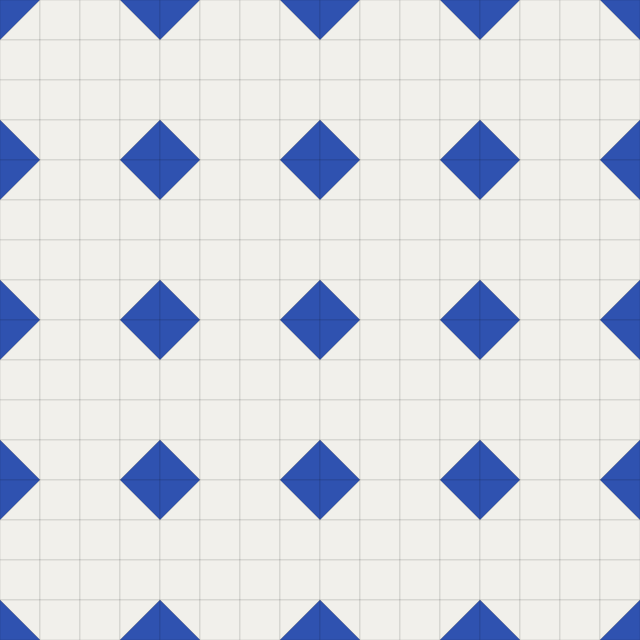
Snowball exists to partner. Set alternately with a Nine Patch, the small corner triangles of four snowballs meet the corner squares of the nine patches and form a completely new square on point that neither block contains. It is the clearest demonstration in traditional quilting that the pattern lives between the blocks, not only inside them.
Snowball cutting chart
Cut sizes include a ¼″ seam allowance: ½″ on squares and rectangles, ⅞″ on half-square triangles, and 1¼″ on quarter-square triangles. Pick a finished block size:
| Fabric | Shape | Cut size | Qty | Notes |
|---|---|---|---|---|
| Background | HST square | 2⅜" × 2⅜" | 2 | cut once on the diagonal → 4 triangles |
| Background | Rectangle | 2" × 3½" | 2 | finishes 1½" × 3" |
| Background | Rectangle | 3½" × 6½" | 1 | finishes 3" × 6" |
| Dark | HST square | 2⅜" × 2⅜" | 2 | cut once on the diagonal → 4 triangles |
| Fabric | Shape | Cut size | Qty | Notes |
|---|---|---|---|---|
| Background | HST square | 3⅛" × 3⅛" | 2 | cut once on the diagonal → 4 triangles |
| Background | Rectangle | 2¾" × 5" | 2 | finishes 2¼" × 4½" |
| Background | Rectangle | 5" × 9½" | 1 | finishes 4½" × 9" |
| Dark | HST square | 3⅛" × 3⅛" | 2 | cut once on the diagonal → 4 triangles |
| Fabric | Shape | Cut size | Qty | Notes |
|---|---|---|---|---|
| Background | HST square | 3⅜" × 3⅜" | 2 | cut once on the diagonal → 4 triangles |
| Background | Rectangle | 3" × 5½" | 2 | finishes 2½" × 5" |
| Background | Rectangle | 5½" × 10½" | 1 | finishes 5" × 10" |
| Dark | HST square | 3⅜" × 3⅜" | 2 | cut once on the diagonal → 4 triangles |
| Fabric | Shape | Cut size | Qty | Notes |
|---|---|---|---|---|
| Background | HST square | 3⅞" × 3⅞" | 2 | cut once on the diagonal → 4 triangles |
| Background | Rectangle | 3½" × 6½" | 2 | finishes 3" × 6" |
| Background | Rectangle | 6½" × 12½" | 1 | finishes 6" × 12" |
| Dark | HST square | 3⅞" × 3⅞" | 2 | cut once on the diagonal → 4 triangles |
| Fabric | Shape | Cut size | Qty | Notes |
|---|---|---|---|---|
| Background | HST square | 4⅝" × 4⅝" | 2 | cut once on the diagonal → 4 triangles |
| Background | Rectangle | 4¼" × 8" | 2 | finishes 3¾" × 7½" |
| Background | Rectangle | 8" × 15½" | 1 | finishes 7½" × 15" |
| Dark | HST square | 4⅝" × 4⅝" | 2 | cut once on the diagonal → 4 triangles |
How it goes together
Sew a small square right sides together across each corner of the large square, stitch on the diagonal, trim, and press open. No triangles need to be cut at all.
Tips
- Draw the diagonal on the small squares, or press them in half, so you have a stitching line.
- Stitch a thread's width outside the drawn line — the fold takes up a little fabric and this keeps the corner square.
- Trim the middle layer only, and leave the base square intact for stability while you work.
How much fabric for a Snowball quilt?
Yardage for a whole quilt of Snowball blocks, computed the way the studio does it — every piece packed across a 40″ usable width with 10% added for waste.
| Quilt size | Blocks | Finished | Top fabric | Backing | Binding |
|---|---|---|---|---|---|
| Baby 36×48 | 12 | 36" × 48" | Background 1⅝ yd · Dark ⅜ yd | 2½ yd | ⅜ yd |
| Throw 60×72 | 30 | 60" × 72" | Background 3⅞ yd · Dark ¾ yd | 3⅞ yd | ½ yd |
| Queen 90×108 | 72 | 96" × 108" | Background 9⅛ yd · Dark 1⅞ yd | 8¾ yd | ⅞ yd |
What it looks like in a quilt
A single block only tells you half the story. Set sixteen of them together and the secondary pattern appears where the blocks touch:
Snowball questions
What size corner squares for a snowball block?
It depends how much corner you want to remove; a common choice is corner squares one third the finished block size. FourPatch shows the finished geometry as you change it.
What block goes with a snowball?
A nine patch, most traditionally, at the same finished size. The corners meet to form a new on-point square across the seam line.