Card Trick quilt block
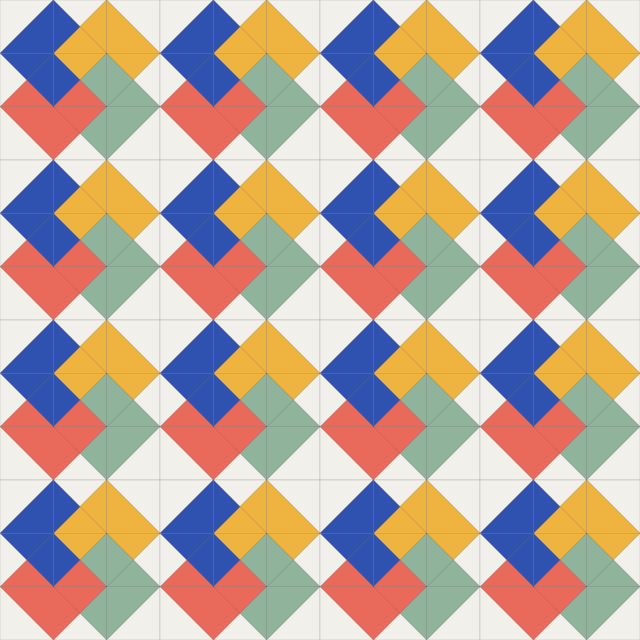
Four overlapping "cards" woven around a central pinwheel, built entirely from half- and quarter-square triangles. It is a genuine optical illusion in fabric.
Also known as Card Trick Block.
Card Trick is a twentieth-century block and one of the cleverest in common use. Four coloured cards appear to lie over and under one another; the effect depends entirely on correct value placement, and it collapses instantly if two cards are too close in value. It is a fixture of sampler quilts as the block that teaches quilters to think about value rather than colour.
Card Trick cutting chart
Cut sizes include a ¼″ seam allowance: ½″ on squares and rectangles, ⅞″ on half-square triangles, and 1¼″ on quarter-square triangles. Pick a finished block size:
| Fabric | Shape | Cut size | Qty | Notes |
|---|---|---|---|---|
| Accent | HST square | 2⅞" × 2⅞" | 1 | cut once on the diagonal → 1 triangle |
| Accent | QST square | 3¼" × 3¼" | 1 | cut twice on the diagonal → 4 triangles |
| Background | HST square | 2⅞" × 2⅞" | 2 | cut once on the diagonal → 4 triangles |
| Background | QST square | 3¼" × 3¼" | 1 | cut twice on the diagonal → 4 triangles |
| Dark | HST square | 2⅞" × 2⅞" | 1 | cut once on the diagonal → 1 triangle |
| Dark | QST square | 3¼" × 3¼" | 1 | cut twice on the diagonal → 4 triangles |
| Highlight | HST square | 2⅞" × 2⅞" | 1 | cut once on the diagonal → 1 triangle |
| Highlight | QST square | 3¼" × 3¼" | 1 | cut twice on the diagonal → 4 triangles |
| Secondary | HST square | 2⅞" × 2⅞" | 1 | cut once on the diagonal → 1 triangle |
| Secondary | QST square | 3¼" × 3¼" | 1 | cut twice on the diagonal → 4 triangles |
| Fabric | Shape | Cut size | Qty | Notes |
|---|---|---|---|---|
| Accent | HST square | 3⅞" × 3⅞" | 1 | cut once on the diagonal → 1 triangle |
| Accent | QST square | 4¼" × 4¼" | 1 | cut twice on the diagonal → 4 triangles |
| Background | HST square | 3⅞" × 3⅞" | 2 | cut once on the diagonal → 4 triangles |
| Background | QST square | 4¼" × 4¼" | 1 | cut twice on the diagonal → 4 triangles |
| Dark | HST square | 3⅞" × 3⅞" | 1 | cut once on the diagonal → 1 triangle |
| Dark | QST square | 4¼" × 4¼" | 1 | cut twice on the diagonal → 4 triangles |
| Highlight | HST square | 3⅞" × 3⅞" | 1 | cut once on the diagonal → 1 triangle |
| Highlight | QST square | 4¼" × 4¼" | 1 | cut twice on the diagonal → 4 triangles |
| Secondary | HST square | 3⅞" × 3⅞" | 1 | cut once on the diagonal → 1 triangle |
| Secondary | QST square | 4¼" × 4¼" | 1 | cut twice on the diagonal → 4 triangles |
| Fabric | Shape | Cut size | Qty | Notes |
|---|---|---|---|---|
| Accent | HST square | 4¼" × 4¼" | 1 | cut once on the diagonal → 1 triangle |
| Accent | QST square | 4⅝" × 4⅝" | 1 | cut twice on the diagonal → 4 triangles |
| Background | HST square | 4¼" × 4¼" | 2 | cut once on the diagonal → 4 triangles |
| Background | QST square | 4⅝" × 4⅝" | 1 | cut twice on the diagonal → 4 triangles |
| Dark | HST square | 4¼" × 4¼" | 1 | cut once on the diagonal → 1 triangle |
| Dark | QST square | 4⅝" × 4⅝" | 1 | cut twice on the diagonal → 4 triangles |
| Highlight | HST square | 4¼" × 4¼" | 1 | cut once on the diagonal → 1 triangle |
| Highlight | QST square | 4⅝" × 4⅝" | 1 | cut twice on the diagonal → 4 triangles |
| Secondary | HST square | 4¼" × 4¼" | 1 | cut once on the diagonal → 1 triangle |
| Secondary | QST square | 4⅝" × 4⅝" | 1 | cut twice on the diagonal → 4 triangles |
| Fabric | Shape | Cut size | Qty | Notes |
|---|---|---|---|---|
| Accent | HST square | 4⅞" × 4⅞" | 1 | cut once on the diagonal → 1 triangle |
| Accent | QST square | 5¼" × 5¼" | 1 | cut twice on the diagonal → 4 triangles |
| Background | HST square | 4⅞" × 4⅞" | 2 | cut once on the diagonal → 4 triangles |
| Background | QST square | 5¼" × 5¼" | 1 | cut twice on the diagonal → 4 triangles |
| Dark | HST square | 4⅞" × 4⅞" | 1 | cut once on the diagonal → 1 triangle |
| Dark | QST square | 5¼" × 5¼" | 1 | cut twice on the diagonal → 4 triangles |
| Highlight | HST square | 4⅞" × 4⅞" | 1 | cut once on the diagonal → 1 triangle |
| Highlight | QST square | 5¼" × 5¼" | 1 | cut twice on the diagonal → 4 triangles |
| Secondary | HST square | 4⅞" × 4⅞" | 1 | cut once on the diagonal → 1 triangle |
| Secondary | QST square | 5¼" × 5¼" | 1 | cut twice on the diagonal → 4 triangles |
| Fabric | Shape | Cut size | Qty | Notes |
|---|---|---|---|---|
| Accent | HST square | 5⅞" × 5⅞" | 1 | cut once on the diagonal → 1 triangle |
| Accent | QST square | 6¼" × 6¼" | 1 | cut twice on the diagonal → 4 triangles |
| Background | HST square | 5⅞" × 5⅞" | 2 | cut once on the diagonal → 4 triangles |
| Background | QST square | 6¼" × 6¼" | 1 | cut twice on the diagonal → 4 triangles |
| Dark | HST square | 5⅞" × 5⅞" | 1 | cut once on the diagonal → 1 triangle |
| Dark | QST square | 6¼" × 6¼" | 1 | cut twice on the diagonal → 4 triangles |
| Highlight | HST square | 5⅞" × 5⅞" | 1 | cut once on the diagonal → 1 triangle |
| Highlight | QST square | 6¼" × 6¼" | 1 | cut twice on the diagonal → 4 triangles |
| Secondary | HST square | 5⅞" × 5⅞" | 1 | cut once on the diagonal → 1 triangle |
| Secondary | QST square | 6¼" × 6¼" | 1 | cut twice on the diagonal → 4 triangles |
How it goes together
A nine-patch grid of triangle units — four HSTs, four QSTs and a central QST. Every triangle has an assigned card colour and background, and getting one wrong breaks the weave.
Tips
- Lay every unit out on a design wall before sewing a single seam. This block is unforgiving of a swapped triangle.
- Use four clearly distinct colours plus a background that contrasts with all of them.
- Label the units as you cut. It sounds fussy; it saves an hour of unpicking.
How much fabric for a Card Trick quilt?
Yardage for a whole quilt of Card Trick blocks, computed the way the studio does it — every piece packed across a 40″ usable width with 10% added for waste.
| Quilt size | Blocks | Finished | Top fabric | Backing | Binding |
|---|---|---|---|---|---|
| Baby 36×48 | 12 | 36" × 48" | Background ⅞ yd · Dark ½ yd · Accent ½ yd · Secondary ½ yd · Highlight ½ yd | 2½ yd | ⅜ yd |
| Throw 60×72 | 30 | 60" × 72" | Background 2 yd · Dark 1⅛ yd · Accent 1⅛ yd · Secondary 1⅛ yd · Highlight 1⅛ yd | 3⅞ yd | ½ yd |
| Queen 90×108 | 72 | 96" × 108" | Background 4½ yd · Dark 2⅝ yd · Accent 2⅝ yd · Secondary 2⅝ yd · Highlight 2⅝ yd | 8¾ yd | ⅞ yd |
What it looks like in a quilt
A single block only tells you half the story. Set sixteen of them together and the secondary pattern appears where the blocks touch:
Card Trick questions
Why does my Card Trick not look woven?
Almost always value, not placement. If two of the four cards are close in value they read as one shape and the over-under illusion collapses.
Is Card Trick hard?
The seams are ordinary — it is the organisation that is hard. Nine units, five fabrics and a strict layout mean the difficulty is bookkeeping rather than sewing.