Churn Dash quilt block
HST corners, split rectangles on the sides, plain centre — the side units are the churn handles, and they are what give this nine patch its unmistakable outline.
Also known as Monkey Wrench, Hole in the Barn Door, Shoo Fly variant.
Churn Dash carries more names than almost any other block: Monkey Wrench, Hole in the Barn Door, Lincoln's Platform and Shoo Fly have all been printed over the same geometry. The dash of the name is the plunger of a butter churn, which the side units resemble. It has been in continuous use since at least the mid-nineteenth century and remains a staple of reproduction and scrap quilting.
Churn Dash cutting chart
Cut sizes include a ¼″ seam allowance: ½″ on squares and rectangles, ⅞″ on half-square triangles, and 1¼″ on quarter-square triangles. Pick a finished block size:
| Fabric | Shape | Cut size | Qty | Notes |
|---|---|---|---|---|
| Background | HST square | 2⅞" × 2⅞" | 2 | cut once on the diagonal → 4 triangles |
| Background | Rectangle | 1½" × 2½" | 2 | finishes 1" × 2" |
| Background | Rectangle | 2½" × 1½" | 2 | finishes 2" × 1" |
| Background | Square | 2½" × 2½" | 1 | finishes 2" × 2" |
| Dark | HST square | 2⅞" × 2⅞" | 2 | cut once on the diagonal → 4 triangles |
| Dark | Rectangle | 1½" × 2½" | 2 | finishes 1" × 2" |
| Dark | Rectangle | 2½" × 1½" | 2 | finishes 2" × 1" |
| Fabric | Shape | Cut size | Qty | Notes |
|---|---|---|---|---|
| Background | HST square | 3⅞" × 3⅞" | 2 | cut once on the diagonal → 4 triangles |
| Background | Rectangle | 2" × 3½" | 2 | finishes 1½" × 3" |
| Background | Rectangle | 3½" × 2" | 2 | finishes 3" × 1½" |
| Background | Square | 3½" × 3½" | 1 | finishes 3" × 3" |
| Dark | HST square | 3⅞" × 3⅞" | 2 | cut once on the diagonal → 4 triangles |
| Dark | Rectangle | 2" × 3½" | 2 | finishes 1½" × 3" |
| Dark | Rectangle | 3½" × 2" | 2 | finishes 3" × 1½" |
| Fabric | Shape | Cut size | Qty | Notes |
|---|---|---|---|---|
| Background | HST square | 4¼" × 4¼" | 2 | cut once on the diagonal → 4 triangles |
| Background | Rectangle | 2⅛" × 3⅞" | 2 | finishes 1⅝" × 3⅜" |
| Background | Rectangle | 3⅞" × 2⅛" | 2 | finishes 3⅜" × 1⅝" |
| Background | Square | 3⅞" × 3⅞" | 1 | finishes 3⅜" × 3⅜" |
| Dark | HST square | 4¼" × 4¼" | 2 | cut once on the diagonal → 4 triangles |
| Dark | Rectangle | 2⅛" × 3⅞" | 2 | finishes 1⅝" × 3⅜" |
| Dark | Rectangle | 3⅞" × 2⅛" | 2 | finishes 3⅜" × 1⅝" |
| Fabric | Shape | Cut size | Qty | Notes |
|---|---|---|---|---|
| Background | HST square | 4⅞" × 4⅞" | 2 | cut once on the diagonal → 4 triangles |
| Background | Rectangle | 2½" × 4½" | 2 | finishes 2" × 4" |
| Background | Rectangle | 4½" × 2½" | 2 | finishes 4" × 2" |
| Background | Square | 4½" × 4½" | 1 | finishes 4" × 4" |
| Dark | HST square | 4⅞" × 4⅞" | 2 | cut once on the diagonal → 4 triangles |
| Dark | Rectangle | 2½" × 4½" | 2 | finishes 2" × 4" |
| Dark | Rectangle | 4½" × 2½" | 2 | finishes 4" × 2" |
| Fabric | Shape | Cut size | Qty | Notes |
|---|---|---|---|---|
| Background | HST square | 5⅞" × 5⅞" | 2 | cut once on the diagonal → 4 triangles |
| Background | Rectangle | 3" × 5½" | 2 | finishes 2½" × 5" |
| Background | Rectangle | 5½" × 3" | 2 | finishes 5" × 2½" |
| Background | Square | 5½" × 5½" | 1 | finishes 5" × 5" |
| Dark | HST square | 5⅞" × 5⅞" | 2 | cut once on the diagonal → 4 triangles |
| Dark | Rectangle | 3" × 5½" | 2 | finishes 2½" × 5" |
| Dark | Rectangle | 5½" × 3" | 2 | finishes 5" × 2½" |
How it goes together
Four HSTs, four two-piece rectangles, one centre square. The rectangles are the fiddly part — each is a light and a dark half-rectangle, and all four must point their dark half toward the outside edge.
Tips
- Strip-piece the side rectangles: sew a light and dark strip, press, then crosscut. Four crosscuts, four identical units.
- The centre square is often cut from the background so the dash reads as a ring, but a contrasting centre works too.
- Because the block is symmetric on both diagonals, it tolerates being rotated during layout without looking wrong.
How much fabric for a Churn Dash quilt?
Yardage for a whole quilt of Churn Dash blocks, computed the way the studio does it — every piece packed across a 40″ usable width with 10% added for waste.
| Quilt size | Blocks | Finished | Top fabric | Backing | Binding |
|---|---|---|---|---|---|
| Baby 36×48 | 12 | 36" × 48" | Background 1¼ yd · Dark 1 yd | 2½ yd | ⅜ yd |
| Throw 60×72 | 30 | 60" × 72" | Background 3 yd · Dark 2⅜ yd | 3⅞ yd | ½ yd |
| Queen 90×108 | 72 | 96" × 108" | Background 6¾ yd · Dark 5½ yd | 8¾ yd | ⅞ yd |
What it looks like in a quilt
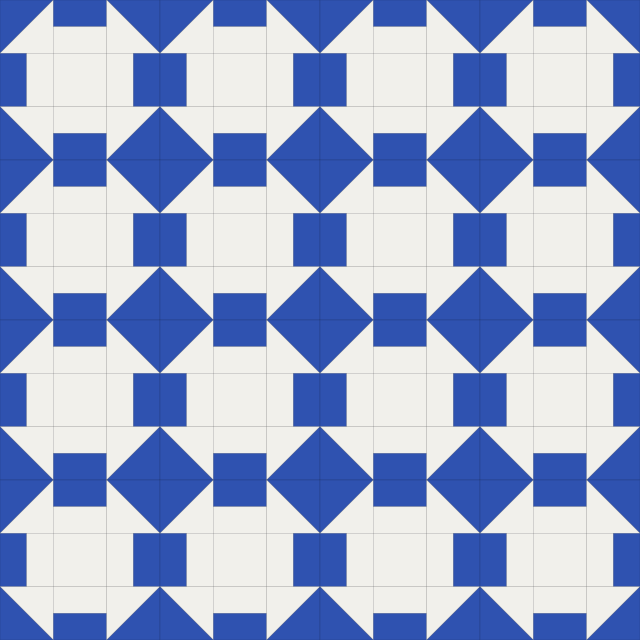
A single block only tells you half the story. Set sixteen of them together and the secondary pattern appears where the blocks touch:
Churn Dash questions
What is the difference between Churn Dash and Monkey Wrench?
Nothing, usually — they are two regional names for the same block. A few sources reserve Monkey Wrench for a related Snail's Trail block, which is why the naming gets confusing.
How do I cut the side units for a 12 inch Churn Dash?
Each side unit finishes 4 by 4 inches and is made of two 2 by 4 inch finished rectangles, so cut strips at 2½ inches and crosscut at 4½ inches.