Kaleidoscope Four quilt block
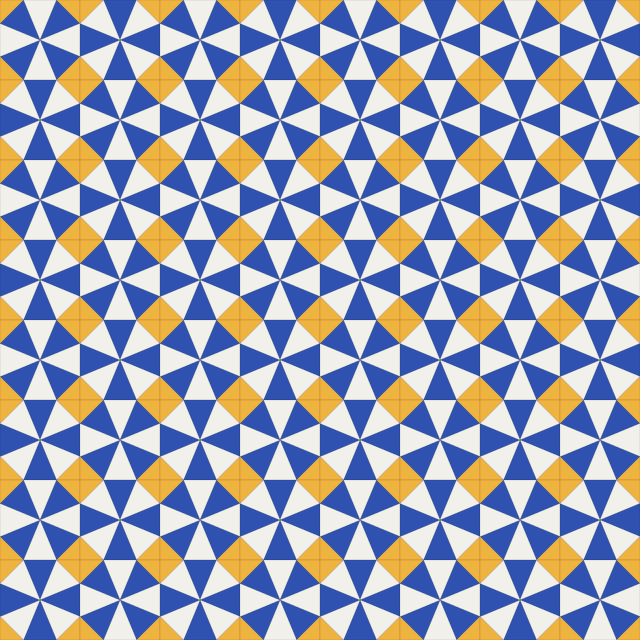
Four kaleidoscope blocks with their light and dark wedges reversed in a checkerboard, so a much larger secondary star appears across the join.
Also known as Four-block kaleidoscope, Kaleidoscope set.
This is what quilters mean when they say a block “sets well”. The individual kaleidoscope is pleasant; four of them with alternating values produce a shape that exists in none of the blocks and only appears when they touch. Nineteenth-century quilters exploited the effect constantly, and it is the single strongest argument for looking at a block in a four-by-four preview before you cut.
Kaleidoscope Four cutting chart
Cut sizes include a ¼″ seam allowance: ½″ on squares and rectangles, ⅞″ on half-square triangles, and 1¼″ on quarter-square triangles. Pick a finished block size:
| Fabric | Shape | Cut size | Qty | Notes |
|---|---|---|---|---|
| Accent | HST square | 1¾" × 1¾" | 8 | cut once on the diagonal → 16 triangles |
| Background | Kaleidoscope wedges | template 2" × 2⅜" | 16 | cut with the full-size template the pattern prints |
| Dark | Kaleidoscope wedges | template 2" × 2⅜" | 16 | cut with the full-size template the pattern prints |
| Fabric | Shape | Cut size | Qty | Notes |
|---|---|---|---|---|
| Accent | HST square | 2¼" × 2¼" | 8 | cut once on the diagonal → 16 triangles |
| Background | Kaleidoscope wedges | template 2⅝" × 3⅛" | 16 | cut with the full-size template the pattern prints |
| Dark | Kaleidoscope wedges | template 2⅝" × 3⅛" | 16 | cut with the full-size template the pattern prints |
| Fabric | Shape | Cut size | Qty | Notes |
|---|---|---|---|---|
| Accent | HST square | 2⅜" × 2⅜" | 8 | cut once on the diagonal → 16 triangles |
| Background | Kaleidoscope wedges | template 2⅞" × 3⅜" | 16 | cut with the full-size template the pattern prints |
| Dark | Kaleidoscope wedges | template 2⅞" × 3⅜" | 16 | cut with the full-size template the pattern prints |
| Fabric | Shape | Cut size | Qty | Notes |
|---|---|---|---|---|
| Accent | HST square | 2⅝" × 2⅝" | 8 | cut once on the diagonal → 16 triangles |
| Background | Kaleidoscope wedges | template 3¼" × 3⅞" | 16 | cut with the full-size template the pattern prints |
| Dark | Kaleidoscope wedges | template 3¼" × 3⅞" | 16 | cut with the full-size template the pattern prints |
| Fabric | Shape | Cut size | Qty | Notes |
|---|---|---|---|---|
| Accent | HST square | 3⅛" × 3⅛" | 8 | cut once on the diagonal → 16 triangles |
| Background | Kaleidoscope wedges | template 3⅞" × 4⅝" | 16 | cut with the full-size template the pattern prints |
| Dark | Kaleidoscope wedges | template 3⅞" × 4⅝" | 16 | cut with the full-size template the pattern prints |
How it goes together
Four kaleidoscope blocks, two in each colourway, arranged in a checkerboard. Nothing new to piece — the whole design is in the arrangement.
Tips
- Lay the four blocks out and photograph them before you sew. A single block rotated the wrong way breaks the larger star and it is very hard to see once the seam is in.
- Keep the corner triangles the same fabric across all four blocks. They are the ground the larger star sits on and varying them dissolves it.
- Scale matters here. Below about 8 inches finished per block the secondary star gets too small to read across a room.
How much fabric for a Kaleidoscope Four quilt?
Yardage for a whole quilt of Kaleidoscope Four blocks, computed the way the studio does it — every piece packed across a 40″ usable width with 10% added for waste.
| Quilt size | Blocks | Finished | Top fabric | Backing | Binding |
|---|---|---|---|---|---|
| Baby 36×48 | 12 | 36" × 48" | Background 2 yd · Dark 2 yd · Accent ⅝ yd | 2½ yd | ⅜ yd |
| Throw 60×72 | 30 | 60" × 72" | Background 4¾ yd · Dark 4¾ yd · Accent 1⅜ yd | 3⅞ yd | ½ yd |
| Queen 90×108 | 72 | 96" × 108" | Background 11½ yd · Dark 11½ yd · Accent 3¼ yd | 8¾ yd | ⅞ yd |
What it looks like in a quilt
A single block only tells you half the story. Set sixteen of them together and the secondary pattern appears where the blocks touch:
Kaleidoscope Four questions
Do I have to alternate the blocks?
For this particular effect, yes — the secondary star comes from the value reversal. Set them all the same way and you get a pleasant repeating octagon instead, which is a perfectly good quilt.
How many fabrics does it need?
Three does it: a light, a dark and a corner fabric. More fabrics make it scrappy without making it more interesting.