Diagonal Stripe quilt block
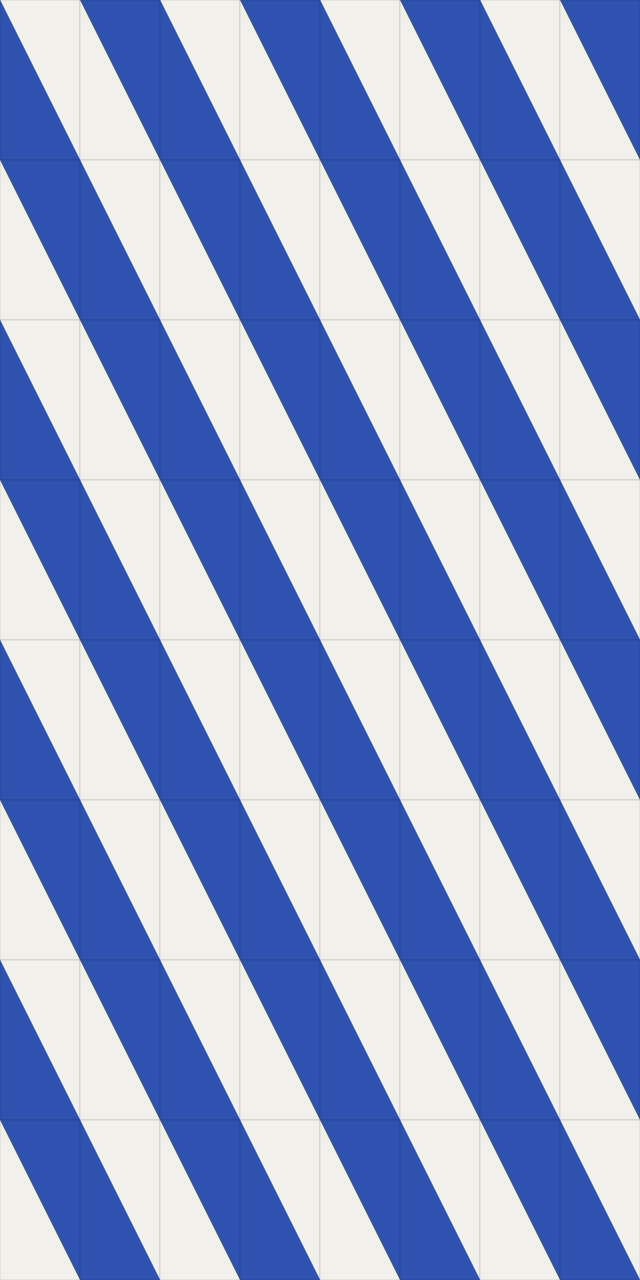
Half-rectangle triangles all leaning the same way, so the seams line up block to block and the quilt reads as one set of long diagonal bands.
Also known as Bias stripe, Slant.
A diagonal stripe is what you get when you stop alternating. Quilters have arrived at it accidentally for two centuries — set any directional block all one way and it happens — and deliberately since the modern-quilt movement made large, calm, graphic tops fashionable again.
Diagonal Stripe cutting chart
Cut sizes include a ¼″ seam allowance: ½″ on squares and rectangles, ⅞″ on half-square triangles, and 1¼″ on quarter-square triangles. Pick a finished block size:
| Fabric | Shape | Cut size | Qty | Notes |
|---|---|---|---|---|
| Background | HRT rectangle, “\” diagonal | 4" × 7" | 4 | finishes 3" × 6" — sew the diagonal, then trim to 3½" × 6½" |
| Dark | HRT rectangle, “\” diagonal | 4" × 7" | 4 | finishes 3" × 6" — sew the diagonal, then trim to 3½" × 6½" |
| Fabric | Shape | Cut size | Qty | Notes |
|---|---|---|---|---|
| Background | HRT rectangle, “\” diagonal | 5½" × 10" | 4 | finishes 4½" × 9" — sew the diagonal, then trim to 5" × 9½" |
| Dark | HRT rectangle, “\” diagonal | 5½" × 10" | 4 | finishes 4½" × 9" — sew the diagonal, then trim to 5" × 9½" |
| Fabric | Shape | Cut size | Qty | Notes |
|---|---|---|---|---|
| Background | HRT rectangle, “\” diagonal | 6" × 11" | 4 | finishes 5" × 10" — sew the diagonal, then trim to 5½" × 10½" |
| Dark | HRT rectangle, “\” diagonal | 6" × 11" | 4 | finishes 5" × 10" — sew the diagonal, then trim to 5½" × 10½" |
| Fabric | Shape | Cut size | Qty | Notes |
|---|---|---|---|---|
| Background | HRT rectangle, “\” diagonal | 7" × 13" | 4 | finishes 6" × 12" — sew the diagonal, then trim to 6½" × 12½" |
| Dark | HRT rectangle, “\” diagonal | 7" × 13" | 4 | finishes 6" × 12" — sew the diagonal, then trim to 6½" × 12½" |
| Fabric | Shape | Cut size | Qty | Notes |
|---|---|---|---|---|
| Background | HRT rectangle, “\” diagonal | 8½" × 16" | 4 | finishes 7½" × 15" — sew the diagonal, then trim to 8" × 15½" |
| Dark | HRT rectangle, “\” diagonal | 8½" × 16" | 4 | finishes 7½" × 15" — sew the diagonal, then trim to 8" × 15½" |
How it goes together
Four HRTs, all the same handedness, in a 2 × 2. Because nothing mirrors, this is the easiest block in the half-rectangle family: one stack of cutting, one stack of pressing.
Tips
- This is the block to start with if you have never sewn an HRT. Every unit is identical, so a mistake is a consistent mistake and easy to correct.
- The stripe angle comes from the cell aspect, not the block size. A 1:2 cell gives roughly 27°; try 3:4 in the block editor for a steeper, busier stripe.
- Use it as a border. A single row of diagonal-stripe blocks makes a barber-pole edge that costs almost nothing to piece.
How much fabric for a Diagonal Stripe quilt?
Yardage for a whole quilt of Diagonal Stripe blocks, computed the way the studio does it — every piece packed across a 40″ usable width with 10% added for waste.
| Quilt size | Blocks | Finished | Top fabric | Backing | Binding |
|---|---|---|---|---|---|
| Baby 36×48 | 6 | 36" × 48" | Background 1¾ yd · Dark 1¾ yd | 2½ yd | ⅜ yd |
| Throw 60×72 | 15 | 60" × 72" | Background 4⅜ yd · Dark 4⅜ yd | 3⅞ yd | ½ yd |
| Queen 90×108 | 40 | 96" × 120" | Background 11⅝ yd · Dark 11⅝ yd | 10¾ yd | ⅞ yd |
What it looks like in a quilt
A single block only tells you half the story. Set sixteen of them together and the secondary pattern appears where the blocks touch:
Diagonal Stripe questions
How do I make the stripes wider?
Make the block bigger, or reduce the number of columns. The stripe width is the finished cell width, so a 12 inch block on a 2 × 2 grid gives 6 inch bands.
Can I get the stripes to run the other way?
Yes — use the Flip tool on the quilt, or mirror the block in the editor. Flipping alternate columns instead gives you a zigzag.