Ribbon Braid quilt block
Three half-rectangle triangles in a row, in three fabrics, so the colours seem to fold over one another like a woven ribbon.
Also known as Ribbon, Braid unit, Twist.
Braid and ribbon patterns are the quilter’s answer to trim and passementerie — the woven bands that edged clothing and upholstery. They appear as border treatments long before anyone made a whole quilt from them, which is still the best place to use them.
Ribbon Braid cutting chart
Cut sizes include a ¼″ seam allowance: ½″ on squares and rectangles, ⅞″ on half-square triangles, and 1¼″ on quarter-square triangles. Pick a finished block size:
| Fabric | Shape | Cut size | Qty | Notes |
|---|---|---|---|---|
| Accent | HRT rectangle, “\” diagonal | 3" × 5" | 2 | finishes 2" × 4" — sew the diagonal, then trim to 2½" × 4½" |
| Background | HRT rectangle, “\” diagonal | 3" × 5" | 2 | finishes 2" × 4" — sew the diagonal, then trim to 2½" × 4½" |
| Dark | HRT rectangle, “\” diagonal | 3" × 5" | 2 | finishes 2" × 4" — sew the diagonal, then trim to 2½" × 4½" |
| Fabric | Shape | Cut size | Qty | Notes |
|---|---|---|---|---|
| Accent | HRT rectangle, “\” diagonal | 4" × 7" | 2 | finishes 3" × 6" — sew the diagonal, then trim to 3½" × 6½" |
| Background | HRT rectangle, “\” diagonal | 4" × 7" | 2 | finishes 3" × 6" — sew the diagonal, then trim to 3½" × 6½" |
| Dark | HRT rectangle, “\” diagonal | 4" × 7" | 2 | finishes 3" × 6" — sew the diagonal, then trim to 3½" × 6½" |
| Fabric | Shape | Cut size | Qty | Notes |
|---|---|---|---|---|
| Accent | HRT rectangle, “\” diagonal | 4⅜" × 7⅝" | 2 | finishes 3⅜" × 6⅝" — sew the diagonal, then trim to 3⅞" × 7⅛" |
| Background | HRT rectangle, “\” diagonal | 4⅜" × 7⅝" | 2 | finishes 3⅜" × 6⅝" — sew the diagonal, then trim to 3⅞" × 7⅛" |
| Dark | HRT rectangle, “\” diagonal | 4⅜" × 7⅝" | 2 | finishes 3⅜" × 6⅝" — sew the diagonal, then trim to 3⅞" × 7⅛" |
| Fabric | Shape | Cut size | Qty | Notes |
|---|---|---|---|---|
| Accent | HRT rectangle, “\” diagonal | 5" × 9" | 2 | finishes 4" × 8" — sew the diagonal, then trim to 4½" × 8½" |
| Background | HRT rectangle, “\” diagonal | 5" × 9" | 2 | finishes 4" × 8" — sew the diagonal, then trim to 4½" × 8½" |
| Dark | HRT rectangle, “\” diagonal | 5" × 9" | 2 | finishes 4" × 8" — sew the diagonal, then trim to 4½" × 8½" |
| Fabric | Shape | Cut size | Qty | Notes |
|---|---|---|---|---|
| Accent | HRT rectangle, “\” diagonal | 6" × 11" | 2 | finishes 5" × 10" — sew the diagonal, then trim to 5½" × 10½" |
| Background | HRT rectangle, “\” diagonal | 6" × 11" | 2 | finishes 5" × 10" — sew the diagonal, then trim to 5½" × 10½" |
| Dark | HRT rectangle, “\” diagonal | 6" × 11" | 2 | finishes 5" × 10" — sew the diagonal, then trim to 5½" × 10½" |
How it goes together
Three HRTs side by side, each in a different fabric, all leaning the same way. The braid effect comes entirely from the fabric order: light, medium, dark repeated across the quilt reads as depth.
Tips
- Order the three fabrics by value, not by hue. A ribbon reads as folded because one facet is lighter than the next, and hue alone will not do it.
- This block is wider than it is tall, so it makes a natural border strip. One row across the top and bottom of a plain quilt is a finished design.
- Reverse the fabric order in alternate rows and the braid appears to change direction — worth trying in the preview before you cut.
How much fabric for a Ribbon Braid quilt?
Yardage for a whole quilt of Ribbon Braid blocks, computed the way the studio does it — every piece packed across a 40″ usable width with 10% added for waste.
| Quilt size | Blocks | Finished | Top fabric | Backing | Binding |
|---|---|---|---|---|---|
| Baby 36×48 | 18 | 36" × 48" | Background 1⅜ yd · Dark 1⅜ yd · Accent 1⅜ yd | 2½ yd | ⅜ yd |
| Throw 60×72 | 45 | 60" × 72" | Background 3⅝ yd · Dark 3⅝ yd · Accent 3⅝ yd | 3⅞ yd | ½ yd |
| Queen 90×108 | 112 | 96" × 112" | Background 8⅝ yd · Dark 8⅝ yd · Accent 8⅝ yd | 8¾ yd | ⅞ yd |
What it looks like in a quilt
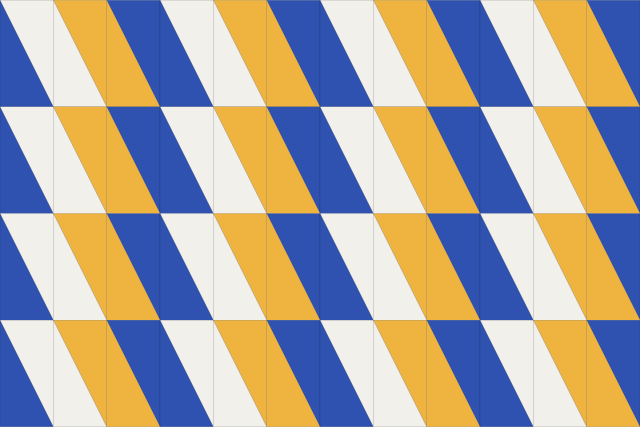
A single block only tells you half the story. Set sixteen of them together and the secondary pattern appears where the blocks touch:
Ribbon Braid questions
How many fabrics do I need?
Three is the minimum for the braid to read. More than four and it stops looking woven and starts looking scrappy, which is a different and equally good quilt.
Is this hard for a beginner?
The units are ordinary HRTs, all the same handedness, so the cutting is simple. The only care needed is keeping the fabric order straight across the row.