HRT Herringbone quilt block
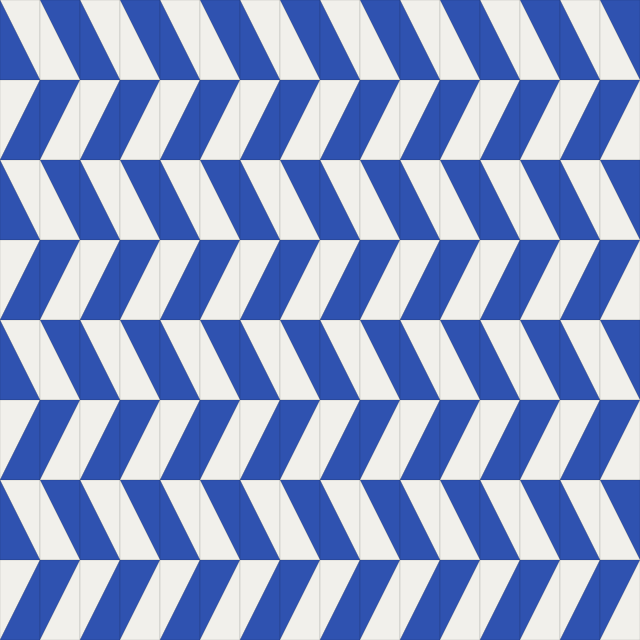
Rows of leaning half-rectangle triangles that alternate direction, producing the woven, parquet-floor look of a herringbone.
Also known as Herringbone, Braid, Parquet.
Herringbone is a weaving and masonry pattern long before it is a quilting one, and quilters have chased it with strips (the French Braid), with rectangles and with triangles. The HRT version is the one that gets the angle right: a true herringbone leans at a shallow angle, and a 45° triangle simply cannot do it.
HRT Herringbone cutting chart
Cut sizes include a ¼″ seam allowance: ½″ on squares and rectangles, ⅞″ on half-square triangles, and 1¼″ on quarter-square triangles. Pick a finished block size:
| Fabric | Shape | Cut size | Qty | Notes |
|---|---|---|---|---|
| Background | HRT rectangle, “/” diagonal | 2½" × 4" | 4 | finishes 1½" × 3" — sew the diagonal, then trim to 2" × 3½" |
| Background | HRT rectangle, “\” diagonal | 2½" × 4" | 4 | finishes 1½" × 3" — sew the diagonal, then trim to 2" × 3½" |
| Dark | HRT rectangle, “/” diagonal | 2½" × 4" | 4 | finishes 1½" × 3" — sew the diagonal, then trim to 2" × 3½" |
| Dark | HRT rectangle, “\” diagonal | 2½" × 4" | 4 | finishes 1½" × 3" — sew the diagonal, then trim to 2" × 3½" |
| Fabric | Shape | Cut size | Qty | Notes |
|---|---|---|---|---|
| Background | HRT rectangle, “/” diagonal | 3¼" × 5½" | 4 | finishes 2¼" × 4½" — sew the diagonal, then trim to 2¾" × 5" |
| Background | HRT rectangle, “\” diagonal | 3¼" × 5½" | 4 | finishes 2¼" × 4½" — sew the diagonal, then trim to 2¾" × 5" |
| Dark | HRT rectangle, “/” diagonal | 3¼" × 5½" | 4 | finishes 2¼" × 4½" — sew the diagonal, then trim to 2¾" × 5" |
| Dark | HRT rectangle, “\” diagonal | 3¼" × 5½" | 4 | finishes 2¼" × 4½" — sew the diagonal, then trim to 2¾" × 5" |
| Fabric | Shape | Cut size | Qty | Notes |
|---|---|---|---|---|
| Background | HRT rectangle, “/” diagonal | 3½" × 6" | 4 | finishes 2½" × 5" — sew the diagonal, then trim to 3" × 5½" |
| Background | HRT rectangle, “\” diagonal | 3½" × 6" | 4 | finishes 2½" × 5" — sew the diagonal, then trim to 3" × 5½" |
| Dark | HRT rectangle, “/” diagonal | 3½" × 6" | 4 | finishes 2½" × 5" — sew the diagonal, then trim to 3" × 5½" |
| Dark | HRT rectangle, “\” diagonal | 3½" × 6" | 4 | finishes 2½" × 5" — sew the diagonal, then trim to 3" × 5½" |
| Fabric | Shape | Cut size | Qty | Notes |
|---|---|---|---|---|
| Background | HRT rectangle, “/” diagonal | 4" × 7" | 4 | finishes 3" × 6" — sew the diagonal, then trim to 3½" × 6½" |
| Background | HRT rectangle, “\” diagonal | 4" × 7" | 4 | finishes 3" × 6" — sew the diagonal, then trim to 3½" × 6½" |
| Dark | HRT rectangle, “/” diagonal | 4" × 7" | 4 | finishes 3" × 6" — sew the diagonal, then trim to 3½" × 6½" |
| Dark | HRT rectangle, “\” diagonal | 4" × 7" | 4 | finishes 3" × 6" — sew the diagonal, then trim to 3½" × 6½" |
| Fabric | Shape | Cut size | Qty | Notes |
|---|---|---|---|---|
| Background | HRT rectangle, “/” diagonal | 4¾" × 8½" | 4 | finishes 3¾" × 7½" — sew the diagonal, then trim to 4¼" × 8" |
| Background | HRT rectangle, “\” diagonal | 4¾" × 8½" | 4 | finishes 3¾" × 7½" — sew the diagonal, then trim to 4¼" × 8" |
| Dark | HRT rectangle, “/” diagonal | 4¾" × 8½" | 4 | finishes 3¾" × 7½" — sew the diagonal, then trim to 4¼" × 8" |
| Dark | HRT rectangle, “\” diagonal | 4¾" × 8½" | 4 | finishes 3¾" × 7½" — sew the diagonal, then trim to 4¼" × 8" |
How it goes together
Eight HRTs, four leaning each way, in two rows of four. Sew into rows, press rows in alternating directions, join. The visual trick is that the two rows lean opposite ways, so the eye reads a weave rather than a stripe.
Tips
- Cut all the “\” units first and all the “/” units second, and keep them in separate piles from cutting to pressing.
- A two-colour herringbone reads as a woven texture; add a third and it starts to read as a pattern of arrows instead. Both are good, but decide which you want before you cut.
- Turn the whole quilt 90° in the preview before you commit. A herringbone running across a bed looks very different from one running down it.
How much fabric for a HRT Herringbone quilt?
Yardage for a whole quilt of HRT Herringbone blocks, computed the way the studio does it — every piece packed across a 40″ usable width with 10% added for waste.
| Quilt size | Blocks | Finished | Top fabric | Backing | Binding |
|---|---|---|---|---|---|
| Baby 36×48 | 12 | 36" × 48" | Background 2½ yd · Dark 2½ yd | 2½ yd | ⅜ yd |
| Throw 60×72 | 30 | 60" × 72" | Background 5⅞ yd · Dark 5⅞ yd | 3⅞ yd | ½ yd |
| Queen 90×108 | 72 | 96" × 108" | Background 14¼ yd · Dark 14¼ yd | 8¾ yd | ⅞ yd |
What it looks like in a quilt
A single block only tells you half the story. Set sixteen of them together and the secondary pattern appears where the blocks touch:
HRT Herringbone questions
Is this the same as a French Braid quilt?
No. A French Braid is strip-pieced in a column and grows outward from a centre strip; this is a repeating block of triangles. The finished look is related but the construction has nothing in common.
How do I keep the rows from drifting?
Trim each HRT to size before it goes into a row. Herringbone accumulates error along the row faster than most blocks because every seam is on the bias.