Half-Rectangle Triangle quilt block
A rectangle cut once corner to corner. It is the half-square triangle’s taller cousin, and the reason it matters is the angle: an HST can only ever point at 45°, and an HRT can point wherever you want.
Also known as HRT, Half-rectangle, Split rectangle.
HRTs are old — they are how nineteenth-century quilters drew a lean, leaning shape without resorting to appliqué — but they were never as popular as the half-square triangle for one blunt reason: they are harder to cut accurately, and until rotary rulers arrived every one had to be templated. Modern quilters rediscovered them through the long, elegant chevrons of contemporary design, where a 45° zigzag looks stubby and a 1:2 zigzag looks intentional.
Half-Rectangle Triangle cutting chart
Cut sizes include a ¼″ seam allowance: ½″ on squares and rectangles, ⅞″ on half-square triangles, and 1¼″ on quarter-square triangles. Pick a finished block size:
| Fabric | Shape | Cut size | Qty | Notes |
|---|---|---|---|---|
| Background | HRT rectangle, “\” diagonal | 7" × 13" | 1 | finishes 6" × 12" — sew the diagonal, then trim to 6½" × 12½" |
| Dark | HRT rectangle, “\” diagonal | 7" × 13" | 1 | finishes 6" × 12" — sew the diagonal, then trim to 6½" × 12½" |
| Fabric | Shape | Cut size | Qty | Notes |
|---|---|---|---|---|
| Background | HRT rectangle, “\” diagonal | 10" × 19" | 1 | finishes 9" × 18" — sew the diagonal, then trim to 9½" × 18½" |
| Dark | HRT rectangle, “\” diagonal | 10" × 19" | 1 | finishes 9" × 18" — sew the diagonal, then trim to 9½" × 18½" |
| Fabric | Shape | Cut size | Qty | Notes |
|---|---|---|---|---|
| Background | HRT rectangle, “\” diagonal | 11" × 21" | 1 | finishes 10" × 20" — sew the diagonal, then trim to 10½" × 20½" |
| Dark | HRT rectangle, “\” diagonal | 11" × 21" | 1 | finishes 10" × 20" — sew the diagonal, then trim to 10½" × 20½" |
| Fabric | Shape | Cut size | Qty | Notes |
|---|---|---|---|---|
| Background | HRT rectangle, “\” diagonal | 13" × 25" | 1 | finishes 12" × 24" — sew the diagonal, then trim to 12½" × 24½" |
| Dark | HRT rectangle, “\” diagonal | 13" × 25" | 1 | finishes 12" × 24" — sew the diagonal, then trim to 12½" × 24½" |
| Fabric | Shape | Cut size | Qty | Notes |
|---|---|---|---|---|
| Background | HRT rectangle, “\” diagonal | 16" × 31" | 1 | finishes 15" × 30" — sew the diagonal, then trim to 15½" × 30½" |
| Dark | HRT rectangle, “\” diagonal | 16" × 31" | 1 | finishes 15" × 30" — sew the diagonal, then trim to 15½" × 30½" |
How it goes together
Cut two rectangles, one of each fabric, place them right sides together with one turned end for end, sew the diagonal, and press. The finished unit is a rectangle split corner to corner. Everything hard about the block lives in those two sentences.
Tips
- There is no ⅞″ rule for HRTs. The extra fabric a diagonal seam needs depends on the aspect ratio, not on a constant, so the honest instruction is to cut generously — an inch over in both directions — and trim the sewn unit down to size.
- A mirrored HRT is a different piece, not the same one turned over. Cut the two diagonals in separate stacks and keep them separate, or you will discover the problem at the ironing board.
- Mark the sewing line rather than trusting the corners. On a 1:2 rectangle the seam does not run corner to corner on the *cut* piece — it runs slightly inside, which is exactly why the trim-to-size step exists.
- Trim with the finished centre point in view. If you trim from an edge instead, the point drifts and the zigzag stops lining up across the quilt.
How much fabric for a Half-Rectangle Triangle quilt?
Yardage for a whole quilt of Half-Rectangle Triangle blocks, computed the way the studio does it — every piece packed across a 40″ usable width with 10% added for waste.
| Quilt size | Blocks | Finished | Top fabric | Backing | Binding |
|---|---|---|---|---|---|
| Baby 36×48 | 6 | 36" × 48" | Background 2½ yd · Dark 2½ yd | 2½ yd | ⅜ yd |
| Throw 60×72 | 15 | 60" × 72" | Background 6 yd · Dark 6 yd | 3⅞ yd | ½ yd |
| Queen 90×108 | 40 | 96" × 120" | Background 16 yd · Dark 16 yd | 10¾ yd | ⅞ yd |
What it looks like in a quilt
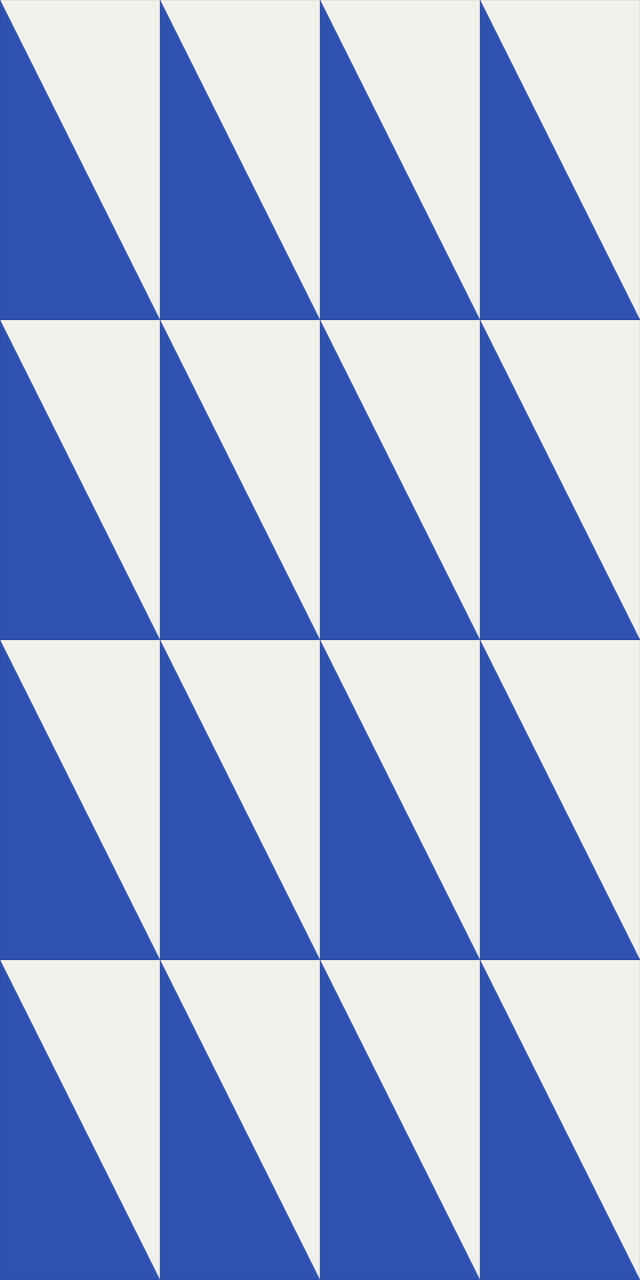
A single block only tells you half the story. Set sixteen of them together and the secondary pattern appears where the blocks touch:
Half-Rectangle Triangle questions
What size rectangles do I cut for a half-rectangle triangle?
For a unit finishing 3 × 6 inches, cut rectangles about 4 × 7 inches, sew the diagonal and trim to 3½ × 6½ inches. FourPatch prints the cut and trim sizes for whatever finished size you set, and lists the two diagonals separately.
Why do my HRTs come out with blunt points?
Almost always because the unit was trimmed from an edge rather than from the seam. Line the ruler up so the diagonal passes exactly through the corners of the trim box, then cut all four sides.
Can I use the two-at-a-time trick like I do for HSTs?
Yes, but it gives you two units of the *same* handedness, not a mirrored pair. For a chevron you need both, so make two batches with the top rectangle turned the other way.